Community Fire Watch
The Road From Applicant to Firefighter
The road into the fire service in Florida is more standardized than most careers: a state certification, a medical credential, a competitive testing process and a hiring cycle that rewards the candidate who prepared years, not weeks, in advance. Departments in St. Johns County and the City of St. Augustine recruit through those channels, and the National Testing Network, the service that posts agency openings and scores candidates centrally, lists positions for this region when they open. This guide maps the pieces in order, for the reader at the beginning of the decision and for the applicant mid process who wants the map again.
What the job actually asks, first
The honest first question is not how to become a firefighter but whether the fit is real, because the credential path is long enough that discovering a mismatch at the academy is expensive. The work is shift life: twenty four hour tours, nights and holidays included, physical labor in heat and in gear that adds pounds, emergency medical calls that outnumber fires several times over in a modern career, and a team structure that depends on each member pulling a real load. The reward side is just as concrete: a pensioned municipal career, a craft that compounds, and a standing in the community that few jobs match. Candidates who spend one shift's worth of research on the reality, including the county's own department pages under St. Johns County fire rescue, arrive at the academy with fewer illusions and better odds.
Florida firefighter certification
The core credential is the State of Florida Firefighter certificate, earned by completing the Minimum Standards Course, the program covering Firefighter I and II, at a training center certified by the state, and passing the state examination. The course runs several months full time, or longer part time, and covers the craft from ladders and hoses to vehicle extrication, live fire evolutions and the incident command basics that structure every scene. A candidate can enroll directly, sponsor through some departments, or carry the course as college credit through firefighter academy programs tied to state colleges. The certification is portable within the state, which is the point: a certified candidate can apply to every department in Florida without redoing the school.
The EMT or paramedic layer
Most Florida departments require an emergency medical credential alongside the fire certification, at minimum the EMT, increasingly the paramedic for career tracks. The EMT course runs a semester and covers assessment, airway management and the fundamentals of emergency care; the paramedic course is a year plus and adds advanced skills and medication authority. The medical layer is not a formality in hiring: medical calls dominate a modern department's volume, and the paramedic patch moves a candidate up more ranked lists than any other single addition. Candidates who sequence the two, fire school then EMT or the reverse, should check the calendar against the hiring cycles below, because finishing both just after a list closes is a long wait for the next one.
Testing on the National Testing Network
The National Testing Network centralizes the entry testing that departments once ran individually. A candidate tests once, on NTN's written and physical batteries, and the scores flow to every agency the candidate selects, which is why a single strong test day can open applications across the state simultaneously. City departments in this region appear on NTN's public safety job boards when they recruit, and the agencies' own pages confirm the openings. Preparation for the physical battery is its own project, below; preparation for the written battery is reading comprehension and mechanical aptitude under time, for which practice tests exist and are worth the modest cost.
Fitness that matches the test
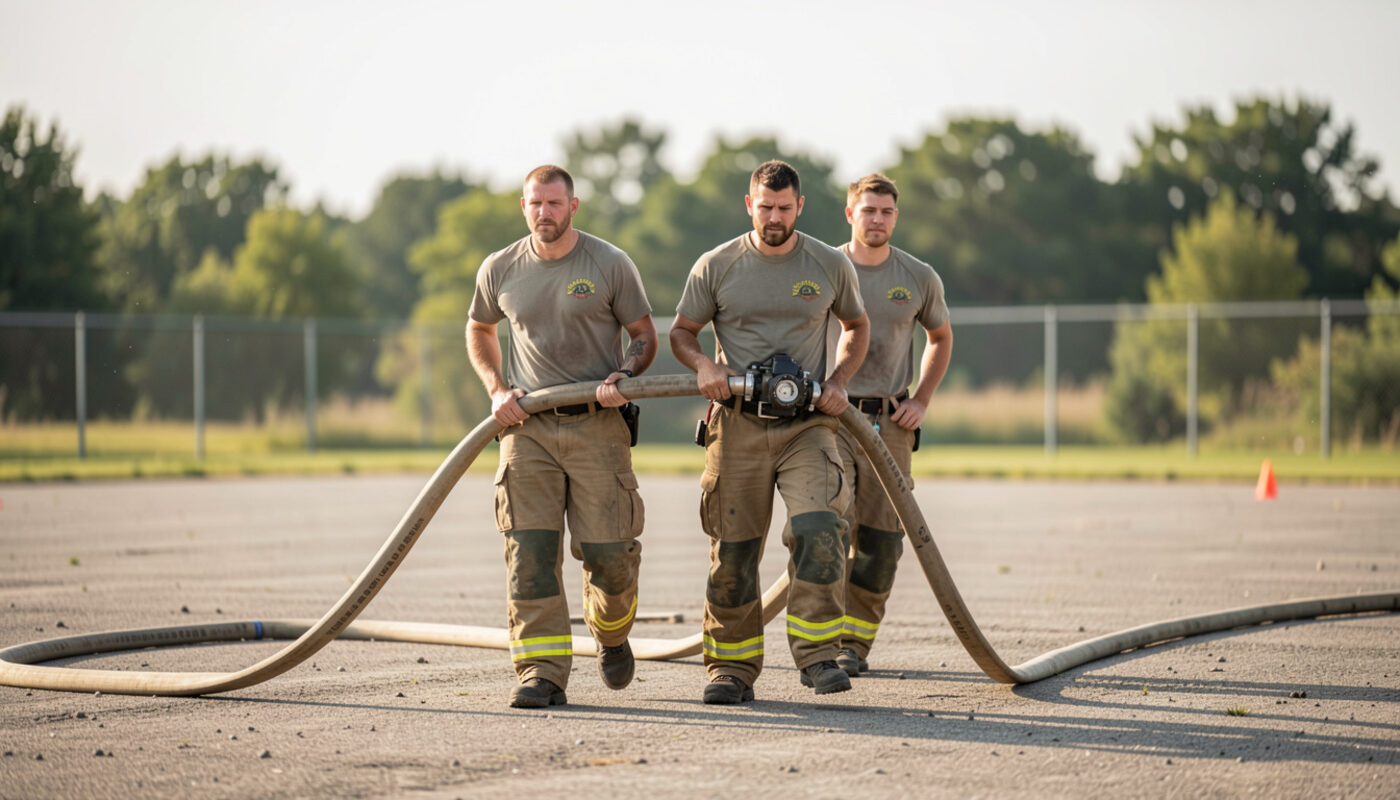
The physical test simulates the job: a stair climb in weighted vest, hose drag, equipment carry, ladder raise and extension, forcible entry, search, rescue drag and ceiling breach, all against the clock. The candidates who pass comfortably train the specific movements for months, not the week before, and the training doubles as academy preparation, because the academy's physical days are longer versions of the same work. A training plan built on loaded carries, stair work and grip strength maps almost one to one onto the battery, and a candidate who cannot yet complete the circuit on a practice day has found the exact goal for the next twelve weeks.
Hiring cycles, backgrounds and the interview
Municipal hiring runs in cycles: a posting, a deadline, the ranked list, backgrounds and interviews, and a class of recruits. Departments in growing counties run the cycle more often than shrinking ones, and the county and city pages under the city fire department page carry the current openings for this region. The background investigation is thorough and reaches driving history, credit and references, so the candidate who cleans up the record before applying, rather than explaining it after, does the smart sequencing. The interview panel asks questions with real answers about teamwork under stress, and the candidate who can draw on actual jobs, sports, military or volunteer service for those answers arrives ahead of the candidate who has only read them.
Volunteer and support paths that start sooner
Not every road into the fire service starts with a paycheck. Volunteer stations in the county's outlying districts train and equip their members, and a volunteer credential is both a service to a community and a running start on the full certification, with some stations sponsoring the Minimum Standards Course for committed members. Support roles exist around the service too: fire inspector and fire investigator tracks grow out of the same certifications, emergency management careers grow out of the county's operations center described in Getting Fire and Storm Alerts in St. Johns County, and communications dispatchers sit inside every call the public makes. Each path sees the work from a different angle, and several of them cross.
Staying ready while the list moves
The waiting period between testing and hiring is where candidacies quietly die, and the candidates who use it win lists. The sequence that works: keep the certifications current, add the paramedic or an instructor credential, keep the fitness at battery level rather than aspiration, and keep a file of the story answers interviews ask for. When the call comes, it comes with a start date measured in days, and the candidate whose gear is already packed for that life begins it on the first shift. The index of community guides around the fire service is under Community Fire Watch.