Home Fire Safety
Stopping a Kitchen Fire in the First Thirty Seconds
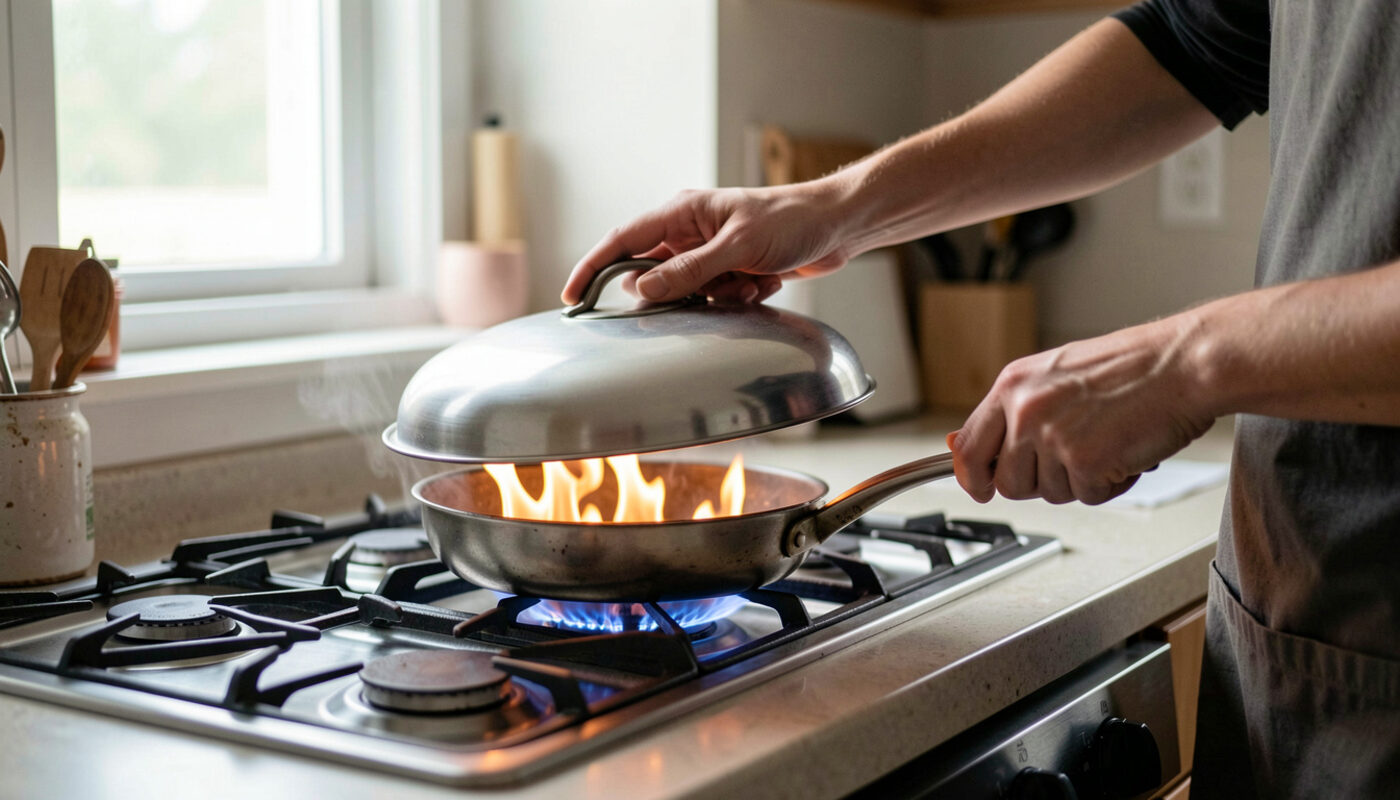
Cooking stands at the top of the American home fire count, year after year, ahead of heating, electrical and everything else. The National Fire Protection Association has documented the pattern for decades: an unattended pan, a few minutes of distraction, and a flame that was the size of a thumb before it was the size of the range. The good news buried in that statistic is proportion: most cooking fires start small, stay on the stovetop, and end without a loss if the cook knows the moves in the first thirty seconds. This guide covers those moves, the physics that makes water the single worst response to a grease fire, and the habits that keep the thirty seconds from ever starting.
The thirty second window
A pan of oil that catches fire is loud, bright and alarming, and it is usually still contained in the pan for the first half minute. The flame feeds on vapors rising off the hot oil surface, not on the liquid below. That is why the fire grows with heat and air and dies when either is taken away. The window matters because every correct move, the lid, the oven door, the off switch, removes heat or air in a second or two, while every wrong move, water, flour, carrying the pan, adds energy or spreads burning oil across the kitchen. Decide now, while reading, which move belongs to which situation, because the kitchen is a bad place to improvise.
What water does to burning oil
Water poured into a grease fire does not put it out; it explodes it. A cup of water dropped into burning oil sinks, flashes to steam in a fraction of a second, and throws burning oil droplets outward in a ball. Videos of the result circulate every holiday season for a reason: the fire that filled one pan becomes the fire that fills the kitchen ceiling in a single frame. Flour and baking powder behave nearly as badly, adding a cloud of combustible dust. Baking soda can smother a very small flame in a pinch, but the reliable answers are the lid and the off switch, not anything from the cabinet above the sink.
The lid move, step by step
For a fire contained in a pan: turn the burner off, slide a metal lid or a flat baking sheet over the pan from the side rather than dropping it from above, and leave it there until the pan is cold. The lid starves the flame of air; sliding it on keeps the hands low and out of the thermal column; leaving it in place matters because lifting it early lets fresh air restart a fire over oil still far above its ignition temperature. A pan that has flamed once and been lidded is done cooking, whatever was in it. The instinct to rescue the dinner has burned more kitchens than the oil itself.
Oven and microwave fires
A fire inside the oven follows the opposite logic: keep the door closed and turn the oven off. An oven is a box built to contain heat, and a fire inside it with the door shut usually consumes the available oxygen and dies. Opening the door feeds it a blast of air exactly when the flames are hottest, and the result often comes out at face height. A microwave fire gets the same treatment: stop the cycle, keep the door shut, unplug it if the cord is reachable without leaning over it. Both appliances stay closed until cold, and both get inspected or replaced before their next use, because a burned cord or a cracked cavity announces the next fire early.
If it spreads past the pan
When the flame is in the range hood, the cabinets above, or running along the counter, the thirty seconds are over: get out, close the door to the kitchen behind you, and call emergency services from outside. A cabinet fire above a stove involves hidden voids and wiring, and the smoke it produces is the more dangerous neighbor. The escape discipline is the one rehearsed in A Home Fire Escape Plan That Works at Night: household at the meeting spot, doors closed, nobody back inside for anything. The engine company that arrives to a kitchen fire contained by a closed door works a very different incident than one that arrives to an open floor plan fully involved.
Prevention beats the thirty seconds
Most cooking fires share a short list of causes, and each has a one line answer. Stay in the kitchen while frying, grilling or broiling, because unattended cooking leads the list by a wide margin. Roll sleeves and skip the loose scarf while working over a burner, and keep a metal lid within arm's reach of the stove as a standing habit, so the tool for the rare bad moment lives next to the tool for every meal. Keep the area around the burner clear of towels, paper and shopping bags. Clean grease from the range hood and the wall behind the stove on the seasonal schedule, since accumulated grease is fuel waiting for a spark; the full checklist lives in A Seasonal Fire Walk-Through of the House.
The alarm question in the kitchen
A smoke alarm too close to the stove gets disabled by a frustrated household, and a disabled alarm protects nobody on any night of the year. The placement compromise, an alarm in the room that leads to the kitchen rather than directly above the burners, keeps nuisance trips rare and real warnings early, as laid out in Where Smoke Alarms Belong in a Florida Home. A heat alarm, which answers temperature rather than smoke, is a legitimate choice directly over a stove where a smoke alarm would cry wolf weekly.
Teaching the moves to everyone who cooks
A kitchen fire plan works only if everyone who uses the stove knows it: the teenager warming oil at midnight, the houseguest making breakfast, the older parent whose reflexes deserve a rehearsal of the lid move in daylight. Walk the household through the two sentences that carry the whole guide. Grease fire: lid on, burner off, wait. Anything bigger: out the door, door closed, call from outside. The statistics and prevention material published by the National Fire Protection Association are the source behind the numbers in this guide, and their cooking safety pages carry the same advice in shorter form.