Home Fire Safety
When Security Bars Turn Windows Into Walls
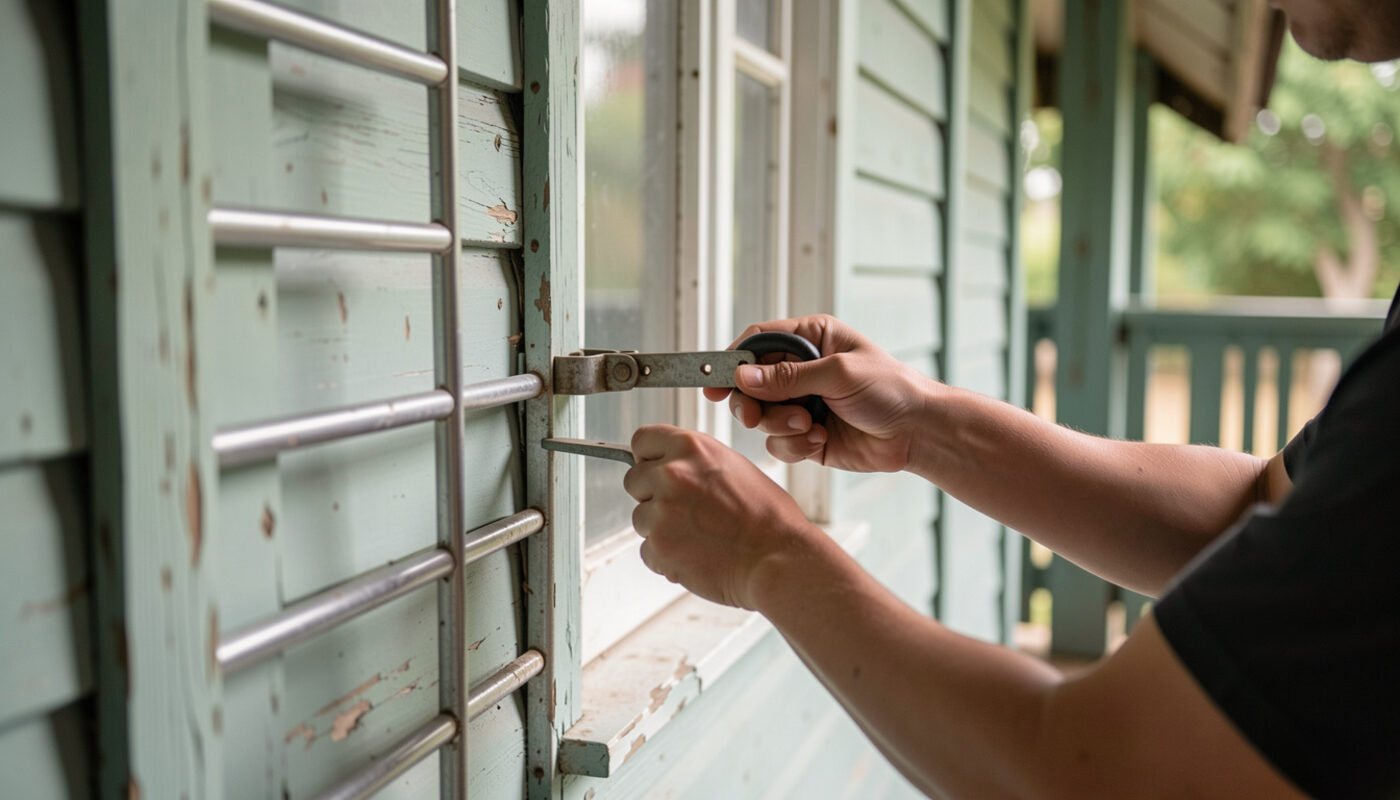
Security bars went up on Florida windows for honest reasons: a work trip that leaves the house empty, a rash of break-ins on the block, an insurance discount, or simply the sense that a ground floor window in a warm climate is a door that anyone can open. The problem is that a window with fixed bars across it is no longer a window at all from the inside, and the escape plan that counts on it as the second way out is counting on a wall. Ready.gov lists escape planning and blocked exits together in its home fire material for exactly this reason. This guide covers what bars do to an escape plan, what a quick release mechanism looks like, and how a household proves the exit still works.
Why the second exit matters so much
Every sleeping room needs two ways out, and in most older homes the second way is the window. Fire research and escape planning guidance converge on the same picture: a door blocked by fire or smoke turns a survivable bedroom into the most dangerous room in the house within minutes, and the window behind fixed bars offers nothing but light. The bedroom window is also the window the arriving engine company looks for when someone is unaccounted for. Bars that cannot be opened from the inside without a key hidden somewhere convert both of those facts into liabilities. The full escape logic is laid out in A Home Fire Escape Plan That Works at Night.
Fixed bars versus quick release
Burglar bars come in two families. Fixed bars bolt to the frame and open with nothing but a cutting torch, which is the wrong equipment to request at two in the morning. Quick release bars carry an interior mechanism, a lever, a pedal or a squeeze handle, that lets a person inside swing or lift the bars out of the opening in a second or two, without a key, without power, and with one hand if needed. Building codes in most jurisdictions that allow residential bars require the release type on sleeping room windows for precisely this reason. A house can keep every inch of its hard exterior and still let its own family out, but only on the side of the bars that faces the pillows.
Keys, padlocks and the hook by the window
Older installations often solve security with a padlock and a key, and the key lives somewhere reasonable: a kitchen drawer, a hook in the hall, the console by the front door. In a smoke filled bedroom at three in the morning, reasonable is thirty feet and two closed doors away. If removing the bars entirely is not on the table this month, the intermediate step is non negotiable: the key on a hook screwed to the window frame itself, low enough for a child on the floor to reach, and a household rule that the hook is where the key lives forever. A releasable cable or a keyed release that stays pinned near the window accomplishes the same thing. The test of any arrangement is the drill, not the drawing.
The monthly thirty second drill
A release mechanism is a machine, and machines in salt air seize. Once a month, as part of the alarm test walk, each barred bedroom window gets opened and its release operated once: lever thrown, bars swung, window raised, everything latched back. The drill takes thirty seconds per window and catches the mechanism that rusted shut over a humid summer, the latch bent the last time the lawn crew worked the hedge, the window itself swollen in its frame. Windows that swell, stick and paint themselves shut are a whole chapter of old house ownership; the seasonal pass that keeps them honest is described in A Seasonal Fire Walk-Through of the House.
Bedroom windows come first
A household budgeting to retrofit bars does the sleeping rooms first, because bedrooms are where people are when fires start at night and where the second exit is a matter of life rather than property. Living room and kitchen windows on the ground floor are next, and utility openings can wait. The same ordering applies to deciding which windows need no bars at all: a small high window in a storage room may be worth leaving naked forever, since it secures little and its loss as an exit costs much. Every room someone might sleep in, including the guest room that gets used twice a year, belongs in the first group.
Renting, associations and old district houses
Renters and owners in historic districts both face a second audience for their window choices: a landlord, an architectural review board, an association. The conversation changes when the request is framed as a life safety upgrade rather than a security change, because releasable bars that meet code are a standard product, installed without touching the historic fabric, and removal in an emergency harms nothing that a hinge return does not undo. A tenant who documents the request in writing has started a clock that responsible owners answer quickly; fire safety obligations around habitability are among the oldest on the books. The city fire department that serves the address will also answer a direct question about local requirements, the same office behind the inspection and education roles described on the city fire department page.
Security without the cage
Not every worried household needs bars at all. Security film holds window glass together and turns a break-in from seconds of reach into minutes of noise. Motion lights, cameras and alarm signs move the burglar's calculation more than most hardware, since burglars select the easy house rather than the strong one. Planting thorny hedges under ground floor windows is the oldest deterrent in Florida and waters itself. These choices protect the television; the releasable bar, or the bare window, protects the sleeper. A household that keeps both goals in view usually finds it can meet each without sacrificing the other.
What to do this weekend
Walk the house with a pencil and mark every window: releasable, fixed or clear. Put a hook and a key on each fixed bedroom window tonight, order release kits for the worst two this month, and add the thirty second release drill to the monthly alarm test. The habit stack around alarms, windows and doors is the home safety core of this magazine, gathered under Home Fire Safety, and the blocked exit is the one defect in that stack that no smoke alarm can compensate for. The guidance on two exits and blocked escapes followed here is published by Ready.gov.