Home Fire Safety
Where Smoke Alarms Belong in a Florida Home
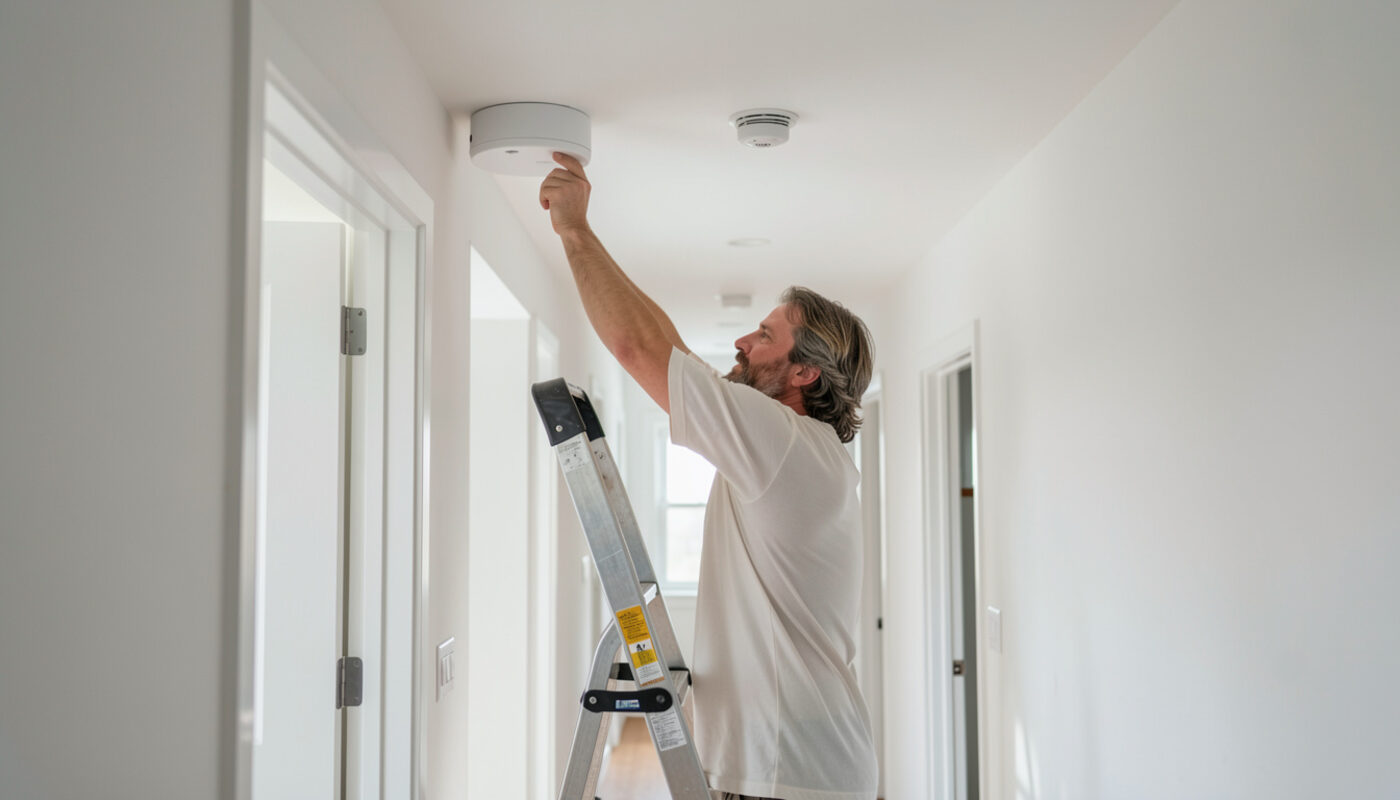
The smoke alarm is the cheapest life safety device in an old house and the one most often installed in the wrong place. In a St. Augustine home, with its high ceilings, wooden lapsiding and afternoon sea breezes pushing air through open windows, placement decides whether the alarm sounds while a fire is still the size of a saucepan or after the hallway is already dark. This guide walks through where alarms belong, how to test them without a ladder gymnastics routine, and how to read the date that tells you when the unit itself has grown too old to trust.
Where each alarm belongs, room by room
The U.S. Fire Administration keeps its placement advice simple: a smoke alarm inside every sleeping room, one outside each separate sleeping area, and one on every level of the home, basement included. In a two story wooden house on a narrow city lot, that usually means five or six units: one in each bedroom, one in the upstairs hall that serves them, one at the top of the stairs, and one near the kitchen path on the ground floor. The unit near the kitchen deserves thought, because an alarm placed directly above the stove will cry wolf every time bacon meets a hot pan, and an alarm that cries wolf gets its battery pulled at midnight. Place it a few feet away from the cooking surface, in the room that leads to it rather than over it, so it catches a real fire but not the steam of a boiling pot.
On the ceiling or high on the wall
Smoke rises, so alarms belong on the ceiling or on the upper part of a wall. The guidance most manufacturers print in their manuals asks for at least a few inches of separation from the corner where ceiling meets wall, because air circulating in that junction moves sluggishly and delays the trip. In old plaster ceilings a practical problem appears: the lath behind the plaster does not always take a screw the way drywall does. A toggle anchor in the plaster, or a small mounting block screwed into a joist located with a stud finder, holds the bracket without cracking a ceiling that has stood since the Coolidge administration. The alarm then twists onto the bracket and the wiring of the house stays untouched.
The ten year date printed on the back
Every smoke alarm carries a manufacture date on its back or side edge, and the rule that follows it is blunt: replace the unit ten years from that date, whether it still beeps on test or not. The sensing chamber loses sensitivity as the years pass, dust settles onto it, and an alarm in its twelfth year can sit quiet through smoke that a new unit answers in seconds. Pop a unit off its bracket the next time you repaint and read the date. If the year starts with a one and the decade has turned, the unit is a decoration. The seasonal check that catches this date is part of the routine described in A Seasonal Fire Walk-Through of the House, which folds alarm ages into one pass through the whole property.
Monthly testing takes one minute
Press the test button once a month and listen for the sound that means the circuit, the horn and the battery all work. A broom handle reaches wall mounted units in most rooms, which saves the stepladder for the ceiling ones. Monthly testing feels excessive until the first time a unit fails it: a battery corroded in place, a terminal gone green, a chirp that everyone in the house learned to ignore over three weeks. Testing is also the moment to run the household drill of closing bedroom doors at night, because an alarm outside a closed door wakes a sleeper later than one inside the room. The two habits, alarms and doors, belong together the way they are described in A Home Fire Escape Plan That Works at Night.
Sealed ten year batteries or replaceable ones
Two kinds of alarm dominate store shelves now. The first uses a replaceable nine volt or AA battery and expects a fresh one each year. The second carries a sealed lithium battery meant to last the life of the unit, so the chirping battery ritual disappears and the whole alarm retires on the ten year date. For rental units and second floor bedrooms, the sealed kind removes the most common failure mode in the country: the battery removed after a nuisance alarm and never put back. Either kind meets the placement rules above. Mixing them in one house works too, as long as a calendar note tracks which units are which age.
Interconnected alarms in an old house
In new construction, alarms wired together all sound at once: a kitchen event announces itself in the back bedroom within a second. In a nineteenth century house, pulling wire through balloon framed walls is a project, not an afternoon. Wireless interconnect alarms bridge the gap, using a radio link between units so that one trigger sounds the whole set. For a household with sleepers on a different floor from the kitchen, interconnection is the single upgrade with the largest effect on how early the warning arrives. An electrician is not required for the wireless kind; pairing the units following the manual is a screwdriver task.
Hearing the alarm when it matters
An alarm on the far side of a closed door, down a hall, through a window air conditioner set on high, may lose the race against a smoldering fire in bedding. Bedrooms deserve their own units for exactly that reason, and households with a hard of hearing member have options built for the problem: strobe lights, bed shakers that connect to the alarm circuit, and units with louder horns. A guest who sleeps in the front room should be covered by the same arrangement, a point that returns in A Sleepover Fire Checklist Parents Can Send Along when the guest is somebody else's child.
What a carbon monoxide alarm adds
A smoke alarm answers fire and nothing else. The carbon monoxide alarm answers the quieter killer that follows a generator run too close to a porch after a hurricane, and the two devices are not substitutes. CO alarms belong outside sleeping areas and on each level, and the combination units that sense both save a ceiling spot in small houses. The placement rules that govern generators after storm outages are covered in Running a Generator After the Storm Without Risk, and the CO alarm is the layer that catches the mistake the household did not know it made.
Tonight is a fine night to start: press one test button, read one date on one bracket, and move the kitchen alarm out of bacon range. The full placement map, one unit at a time over a month, costs less than a dinner out and stands watch for a decade. The placement and testing guidance published by the U.S. Fire Administration is the reference this guide follows.